Physical Fitness of College Students in China: Evidence Mapping and Gap Analysis through a Scoping Review
Physical Fitness of Chinese College Students
Vol. 21 No. 2 : 2026 (611-630)

Abstract
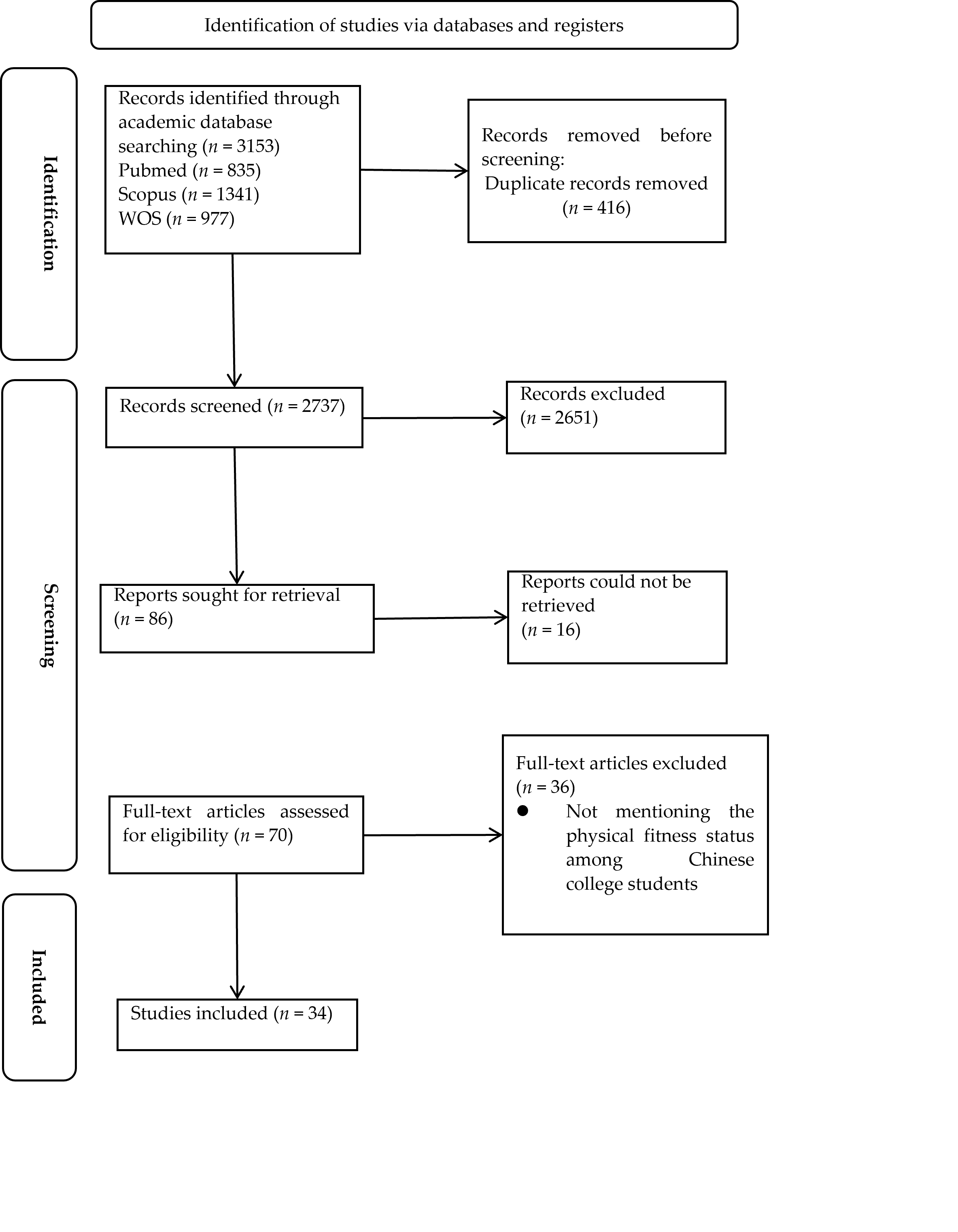
The physical fitness of Chinese college students has always been a key concern of the Government of China, especially due to the consistent decline in recent years, prompting an urgent need for affirmative actions to mitigate this situation. Thus, this scoping review aims to systematically appraise existing evidence regarding the current physical fitness status of college students in China. A systematic search was conducted on the physical fitness of Chinese college students in three databases (PudMed, Scopus and WoS), including 34 articles that evaluated one or more health-related physical fitness components to summarise the current physical fitness status among Chinese college students. Existing research indicates that the physical fitness status of Chinese college students is relatively poor, such as college students’ body mass index falls within the normal range, however, normal weight obesity (NWO) is prevalent. Students with NWO show excessive body fat percentage and insufficient skeletal muscle mass, reflecting the condition of “normal weight but high body fat and low muscle mass”. Most students exhibit cardiorespiratory fitness at a passing level, with relatively few reaching the excellent standard, and a certain proportion remaining below the passing threshold. According to all the 34 articles, eight major factors influence the physical fitness of college students, with lack of exercise identified as the primary factor. Current research on health-related physical fitness among Chinese college students remains limited. Future studies should improve methodological rigor, data timeliness and research depth to provide more robust scientific evidence for policy development and practical interventions.
Keywords :
College student; Chinese; physical fitness,
Correspondance Address
arimifitri@ukm.edu.my
References
Arksey, H., O’malley, L. 2005. Scoping studies: Towards a methodological framework. Int J Soc Res Method 8(1): 19-32. https://doi. org/10.1080/1364557032000119616
Attia, G.M., Alharbi, O.A., Aljohani, R.M. 2023. The impact of irregular menstruation on health: A review of the literature. Cureus 15(11): e49146. https://doi.org/10.7759/cureus.49146
Bull, F.C., Al-Ansari, S.S., Biddle, S., Borodulin, K., Buman, M.P., Cardon, G., Carty, C., Chaput, J.P., Chastin, S., Chou, R., Dempsey, P.C. 2020. World Health Organization 2020 guidelines on physical activity and sedentary behaviour. Br J of Sports Med 54(24): 1451-62. https://doi. org/10.1136/bjsports-2020-102955
Cai, S., Zhang, Y., Chen, Z., Liu, Y., Dang, J., Li, J., Huang, T., Sun, Z., Dong, Y., Ma, J., Song, Y. 2025. Secular trends in physical fitness and cardiovascular risks among Chinese college students: An analysis of five successive national surveys between 2000 and 2019. Lancet Reg Health West Pac 58: 101560. https://doi. org/10.1016/j.lanwpc.2025.101560
Chen, X., Cui, J., Zhang, Y., Peng, W. 2020. The association between BMI and health-related physical fitness among Chinese college students: A cross-sectional study. BMC Public Health 20: 444. https://doi.org/10.1186/s12889020-08517-8
Chooi, Y.C., Ding, C., Magkos, F. 2019. The epidemiology of obesity. Metabolism 92: 6-10. https://doi.org/10.1016/j.metabol.2018.09.005
Chun, C., Yin, W.Z. 2017. Mathematical statisticsbased university students’ physical health conditions and teaching strategies study. Eurasia J Math Sci Technol Educ 13(10): 7077-88. https://doi.org/10.12973/ejmste/78732
Cuntz, U., Quadflieg, N., Voderholzer, U. 2023. Health risk and underweight. Nutrients 15(14): 3262. https://doi.org/10.3390/nu15143262
Deng, J., Liu, Y., Chen, R., Wang, Y. 2023. The relationship between physical activity and life satisfaction among university students in China: The mediating role of self-efficacy and resilience. Behavioral Sciences 13(11): 889. https://doi.org/10.3390/bs13110889
Dobrescu, A.I., Nussbaumer-Streit, B., Klerings, I., Wagner, G., Persad, E., Sommer, I., Herkner, H. and Gartlehner, G. 2021. Restricting evidence syntheses of interventions to English language publications is a viable methodological shortcut for most medical topics: A systematic review. J Clin Epidemiol 137: 209-17. https://doi.org/10.1016/j.jclinepi.2021.04.012
Dong, X., Huang, F., Starratt, G., Yang, Z. 2023. Trend in health-related physical fitness for Chinese male first-year college students: 20132019. Front Public Health 11: 984511. https://doi.org/10.3389/fpubh.2023.984511
Guo, T., Shen, S., Yang, S., Yang, F. 2024. The relationship between BMI and physical fitness among 7451 college freshmen: A cross-sectional study in Beijing, China. Front Physiol 15: 1435157. https://doi.org/10.3389/ fphys.2024.1435157
Hao, M., Yang, J., Xu, S., Yan, W., Yu, H., Wang, Q. 2023. The relationship between body dissatisfaction, lifestyle, and nutritional status among university students in Southern China. BMC Psychiatry 23: 705. https://doi.org/10.1186/ s12888-023-05215-8
Hong, Y., Shen, J., Hu, Y., Gu, Y., Bai, Z., Chen, Y., Huang, S. 2024. The association between physical fitness and mental health among college students: A cross-sectional study. Front Public Health 12: 1384035. https://doi.org/10.3389/fpubh.2024.1384035
Huang, C.F., Chou, F.H., Chang, C.H., Guo, S.E. 2023. The associations of body mass index, body image, perceived stress, and mental health among female nursing students: A cross-sectional study in Taiwan. Healthcare 11(17): 2426. https://doi.org/10.3390/ healthcare11172426
Huang, G., Chen, Y., Lee, B., Qiu, Y., Mao, A., Liang, M., Liu, M. 2025. A study on the effects of modified sprint interval trainingon physical fitness test scores and the quantitative and doseresponse relationships among Chinese male university students. Front Physiol 16: 1555019. https://doi.org/10.3389/fphys.2025.1555019
Jie, C., Xugui, S., Min, Z., Ergang, Z., Hongwu, W., Jun, S. 2023. The influence of home isolation during COVID-19 on the physical fitness development of college students: A study utilizing repeated measures analysis of variance. BMC Public Health 23(1): 2186. https://doi.org/10.1186/s12889-023-16772-8
Kahl, S., Malfertheiner, P. 2004. Role of endoscopic ultrasound in the diagnosis of patients with solid pancreatic masses. Dig Dis 22(1): 26-31. https:// doi.org/10.1159/000078732
Kai, C. 2023. Physical fitness status of college students by gender. Revista Brasileira de Medicina do Esporte 29: 2023. https://doi.org/10.1590/15178692202329012022_0710
Kubieva, S.S., Botagariev, T.A., Konisbaeva, S.I., Mambetov, N., Aralbayev, A.S., Zhetimekov, Y.T., Dairabayev, S.E., Kaliyakbarova, S.K., Sadykova, Z.L. 2019. Health promotion program for the students with regard to the level of their physical activity, physical fitness and health. J Phys Educ Sport 19(1): 703-9. https:// doi.org/10.7752/jpes.2019.01101
Lan, C., Liu, Y., Wang, Y. 2022. Effects of different exercise programs on cardiorespiratory fitness and body composition in college students. J Exerc Sci Fit 20(1): 62-9. https://doi.org/10.1016/j.jesf.2021.12.004
Levac, D., Colquhoun, H., O’brien, K.K. 2010. Scoping studies: Advancing the methodology. Implementation Sci 5(1): 69. https://doi.org/10.1186/1748-5908-5-69
Li, H., Song, Y., Wang, Y., Feng, X., Li, C., Peng, J., Yu, H. 2024. Impact of the COVID-19 pandemic lockdown on Body Mass Index: Athree-year follow up study in 6,156 Chinese college students. Front Endocrinol 15: 1387151. https://doi.org/10.3389/fendo.2024.1387151
Li, J., Lin, Z., Zou, M., Feng, X., Liu, Y., 2025. Association between daily movement behaviors and optimal physical fitness of university students: A compositional data analysis. BMC Public Health 25(1): 877. https://doi.org/10.1186/s12889-025-22151-2
Li, W., Cui, Y., Gong, Q., Zhu, Z. 2022. Association of smartphone use duration with physical fitness among university students: Focus on strength and flexibility. Int J Environ Res Public Health 19(12): 7386. https://doi.org/10.3390/ijerph19127386
Liu, C.H., Lin, Y.C., Huang, W.C., Sui, X., Lavie, C.J., Lin, G.M. 2025. Associations of cardiorespiratory fitness and muscular endurance fitness with pulmonary function in physically active young adults. Arch Bronconeumol 61(1): 5-12. https://doi.org/10.1016/j.arbres.2024.06.005
Liu, Q., Li, Z., Liu, S., 2022. Review on intelligent governance of physical fitness of college students under the background of big data. Discrete Dynamics Nat Soc 2022(1): 4010882. https://doi.org/10.1155/2022/4010882
Liu, Y., Zhai, X., Zhang, Y., Jiang, C., Zeng, J., Yang, M., Xie, X., Zhou, F., Xiang, B. 2023. The promoting effect of exercise motivation on physical fitness in college students: A mediation effect model. BMC Public Health 23(1): 2244. https://doi.org/10.1186/s12889-023-17154-w
Maitiniyazi, G., Chen, Y., Qiu, Y.Y., Xie, Z.X., He, J.Y., Xia, S.F. 2021. Characteristics of body composition and lifestyle in Chinese university students with normal-weight obesity: A crosssectional study. Diabetes Metab Syndr Obes 14: 3427-36. https://doi.org/10.2147/DMSO.S325115
Nguyen, N.T.K., Fan, H.Y., Tsai, M.C., Tung, T.H., Huynh, Q.T.V., Huang, S.Y., Chen, Y.C. 2020. Nutrient intake through childhood and early menarche onset in girls: Systematic review and meta-analysis. Nutrients 12(9): 2544. https://doi.org/10.3390/nu12092544
Niedermeier, M., Frühauf, A., Kopp-Wilfling, P., Rumpold, G., Kopp, M. 2018. Alcohol consumption and physical activity in Austrian college students-A cross-sectional study. Subst Use Misuse 53(10): 1581-90. https://doi.org/10.1080/10826084.2017.1416406
Pi, Q., Xu, J., Sha, M., Liu, X. 2024. Relationship between a body shape index and muscle strength index in Chinese university students: A cross-sectional survey. BMC Sports Sci Med Rehabil 16(1): 48. https://doi.org/10.1186/s13102-024-00837-1
Qian, Y., Che, Z., Fu, C., Chen, X., Zeng, J., Zhang, X., Zeng, Y., Yin, J. 2023. Study on the association between dietary quality and overweight/obesity of Han nationality with cold in Yunnan Plateau by DBI-16: A study based on a multi-ethnic cohort in China. Diabetes Metab Syndr Obes 16: 2311-27. https://doi.org/10.2147/DMSO.S420260
Qin, X., Chen, L., Liu, X., Zheng, S., Wang, X. 2018. Factors affecting body mass index in overweight/obese university students, Gansu, China: A cross-sectional study. Southeast Asian J Trop Med Public Health 49(4): 685-95.
Shu, J., Lu, T., Tao, B., Chen, H., Sui, H., Wang, L., Zhang, Y., Yan, J. 2023. Effects of aerobic exercise on body self-esteem among Chinese college students: A meta-analysis. PloS One 18(9): e0291045. https://doi.org/10.1371/journal.pone.0291045
Sun, F., He, Q., Sun, X., Wang, J. 2022. The association between body mass index and muscular fitness in Chinese college freshmen. Int J Environ Res Public Health 19(21): 14060. https://doi.org/10.3390/ijerph192114060
Sun, J., Liang, H., Wang, L., Chen, Z., Bi, C., Zhang, F. 2025a. Secular trends of physical fitness for college students in Anhui Province over the past decade. BMC Public Health 25(1): 357. https://doi.org/10.1186/s12889-025-21613-x
Sun, Y., Wang, Y., Yu, H., Cheng, K., Wang, H., Liu, J. 2025b. To explore the effects of different ways of high intensity interval training on self-control and physical health of college students. Front Public Health 13: 1550598. https://doi.org/10.3389/fpubh.2025.1550598
Tafireyi, C.G., Grace, J. 2021. Association between sedentariness, eating habits and body composition among Eswatini University students. South African J Res Sport Phys Educ Recreat 43(3): 77-86. 629
Tang, H., Wang, J., Bao, J., Zhang, L. 2024. Physical fitness decline and career paths: A longitudinal study of medical undergraduates. BMC Medical Education 24(1): 513. https://doi.org/10.1186/s12909-024-05493-0
Tian, Q., Wang, H., Kaudimba, K.K., Guo, S., Zhang, H., Gao, R., Wang, R., Luan, X., Lee, J.K.W., Chen, P., Liu, T., Wang, R. 2020. Characteristics of physical fitness and cardiometabolic risk in Chinese university students with normal-weight obesity: A cross-sectional study. Diabetes, Metab Syndr Obes 13: 4157-67. https://doi.org/10.2147/DMSO.S280350
Wang, F., Fu, H. 2017. Physical fitness assessment using supervised SOM classification based on BMI of college students, Northern China. J Phys Educ Sport 17(4): 2622-31.
Wang, J. 2019. The association between physical fitness and physical activity among Chinese college students. J Am College Health 67(6): 602-9. https://doi.org/10.1080/07448481.2018.1515747
Wang, J., Xie, Z., Li, Y., Song, Y., Yan, J., Bai, W., Zhou, T., Qin, J. 2020. Relationship between health status and physical fitness of college students from South China: An empirical study by data mining approach. IEEE Access 8: 67466-73. https://doi.org/10.1109/ACCESS.2020.2986039
Wang, Y., Zhao, L., Gao, L., Pan, A., Xue, H. 2021. Health policy and public health implications of obesity in China. Lancet Diabetes Endocrinol 9(7): 446-61. https://doi.org/10.1016/S22138587(21)00118-2
Wang, M., Konharn, K., Buranarugsa, R., Wanpen, S., Chi, S. 2023a. Effects of Yang-style Tai Chi on body composition and heart rate variability during the COVID-19 pandemic among Chinese college students: A preliminary study. J Assoc Med Sci 56: 133-9
Wang, B., Lin, Q., Wang, Y., Tang, S. 2023b. Policy analysis of the integration of sports and medicine against the backdrop of “healthy China”: A qualitative study using NVivo. Int J Environ Res Public Health 20(3): 2079. https://doi.org/10.3390/ijerph20032079
Watso, J.C., Fancher, I.S., Gomez, D.H., Hutchison, Z.J., Gutiérrez, O.M., Robinson, A.T. 2023. The damaging duo: Obesity and excess dietary salt contribute to hypertension and cardiovascular disease. Obesity Rev 24(8): e13589. https://doi.org/10.1111/obr.13589
Wen, N., Zhao, F., Sun, S., Xiong, J., Zheng, G. 2024. The effect of Baduanjin on body mass and body composition of college students: A randomized controlled trial. Medicine 103(44): e40393. https://doi.org/10.1097/MD.0000000000040393
Wu, H., Lin, P., Zeng, G., Chen, F. 2024. Associations between body mass index and physical fitness indicators among Chinese university students: A multicenter cross-sectional study. BMC Sports Sci Med Rehabil 16(1): 234. https://doi.org/10.1186/s13102-024-01024-y
Yan, W., Nie, M., Ma, R., Guo, Q., Li, H. 2024. The influence of physical literacy of student with different obesity levels on physical fitness: The mediating effect of MVPA. Front Public Health Educ Promo 12: 1463108. https://doi.org/10.3389/fpubh.2024.1463108
Zhai, X., Sawada, S.S., Shi, M., Xiong, C., Koriyama, S., Dimitroff, S.A., Sui, X., Fan, X. 2024. Impact of COVID-19 pandemic lockdown on body mass index and physical fitness in Chinese college students. J Adoles Health 74(5): 892-9. https://doi.org/10.1016/j.jadohealth.2023.12.017
Zhan, Y., Cho, C. 2024. The relationship between digit ratio (2D: 4D), physical fitness indicators and pulmonary function in Chinese college students. Int J Morphology 42(6): 1755-60. http://dx.doi.org/10.4067/S071795022024000601755
Zhang, M., Schumann, M., Huang, T., Tormakangas, T., Cheng, S. 2018. Normal weight obesity and physical fitness in Chinese university students: An overlooked association. BMC Public Health 18(1): 1334. https://doi.org/10.1186/s12889-0186238-3
Zhang, X., Hamilton, X.D., Taylor, Z., Guan, J., Hodges, M., Qu, S., Huang, Y. 2024. Longitudinal changes in Chinese minority college students’ health-related fitness: A multilevel latent growth curve modeling approach. J Am College Health 72(4): 1041-9. https://doi.org/10.1080/07448481.2022.2066955
Zhang, Y., Jiang, X. 2023. The effect of Baduanjin exercise on the physical and mental health of college students: A randomized controlled trial. Medicine 102(34): e34897. https://doi.org/10.1097/MD.0000000000034897